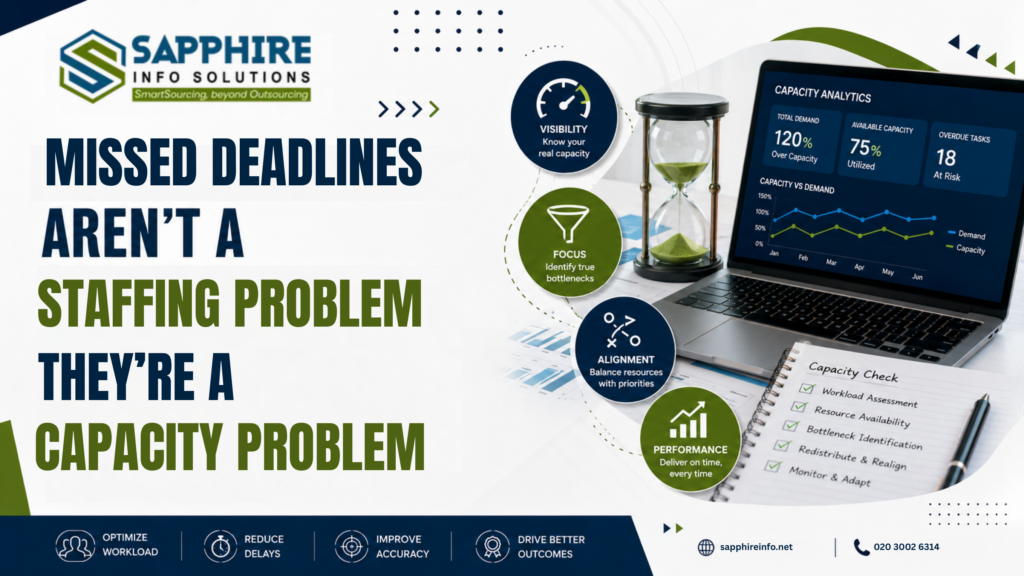

UK Accounting Talent Shortage 2026: Why Firms Are Turning Away Clients

UK accounting talent shortage

UK Accounting Talent Shortage 2026: Why Firms Are Turning Away Clients

There’s strong demand for accounting services across the UK right now. The problem isn’t a shortage of clients — it’s a shortage of people to serve them. According to the 2026 Accounting Talent Index from outsourcing specialist Advancetrack, nearly three-quarters of accountancy practices are operating at or near full capacity, and 73% of firms say they are turning away potential clients simply because they don’t have enough staff.

For an industry built on growth and client relationships, that’s a remarkable — and uncomfortable — statistic. This article looks at what’s driving the shortage, why it’s becoming a structural barrier rather than a temporary blip, and what practical steps firm owners can take to keep growing despite it.

The Numbers Behind the Crisis

A few figures from recent industry research paint a clear picture of where UK accounting firms stand in 2026:

  • 73% of firms say talent shortages are having a severe impact on their business
  • 71% report that staffing issues have slowed their growth trajectory
  • 45% believe the shortage has worsened since 2023, including 19% who say it has deteriorated significantly
  • 74% of firms believe sustained workloads could push people out of the profession altogether
  • Recruiting and onboarding a senior accountant can now cost UK firms £100,000 or more once salary, recruitment fees, training, and lost productivity are factored in

The conclusion from this year’s Index is blunt: the talent shortage has evolved from a recruitment difficulty into what researchers now call a structural barrier to growth.

Why the Shortage Keeps Getting Worse

Demand for Services Isn’t Slowing Down

Regulatory complexity, more frequent compliance deadlines, and a growing appetite among clients for advisory support all mean there’s more work to go around — not less. The shortage isn’t about lack of business opportunity; it’s about not having the people to deliver against it.

Qualified Accountants Are Considering Leaving the Profession

It isn’t just about hiring new people — it’s about keeping the ones you already have. Industry research shows over a quarter of accounting professionals have personally considered leaving the profession, often citing sustained workload pressure rather than dissatisfaction with the work itself.


Younger Talent Has More Career Options Than Ever

Accounting now competes directly with fintech, data, and broader finance careers for the same graduates — sectors often perceived as offering more flexibility or faster career progression. That widens the pool firms are drawing from even thinner.

Wage Growth Hasn’t Kept Pace With Demand

While professional salaries across the UK rose modestly in the past year, the available pool of qualified candidates hasn’t grown to match it. Firms aren’t just competing for talent anymore — they’re bidding it away from each other.

What This Means for Firm Owners

When a firm doesn’t have the capacity to deliver, the consequences ripple outward:

  • Turning away new business — even when demand is strong, firms are declining clients they would otherwise be glad to take on
  • Existing staff absorb more work — increasing the risk of burnout and, ironically, accelerating the very attrition firms are trying to avoid
  • Service quality and turnaround times suffer — clients increasingly notice delays, and client satisfaction can decline even when fees stay the same
  • Growth plans stall — partners report that a lack of experienced staff is now one of the biggest barriers to achieving their firm’s ambitions

Practical Responses Firms Are Already Using

1. Rethinking the Recruitment Model Entirely

Simply posting another job advert often isn’t enough in today’s market. Firms are increasingly looking at flexible, hybrid, and outsourced resourcing models rather than relying solely on local hiring to fill every role.

2. Investing in Automation for Routine Work

Industry data suggests a majority of firms believe automation can free up capacity for more engaging, higher-value work. Even modest investment in AI-assisted bookkeeping, reconciliation, and reporting tools can meaningfully reduce the burden on a stretched team.

3. Reallocating Existing Staff Toward Advisory Work

Some firm leaders are explicitly shifting resources away from low-value compliance tasks and toward advisory services, where accountants act as strategic partners rather than processors — a shift that also tends to improve retention, since advisory work is often more engaging than routine processing.

4. Building Capacity Through Outsourcing

For many firms, outsourcing has moved from a cost-saving tactic to a genuine accounting firm capacity strategy. Rather than waiting months to fill a vacancy — often at a cost approaching six figures once fully loaded — firms are building relationships with outsourced accounting partners who can absorb routine, recurring work and free up in-house teams for client-facing and advisory roles.

Where Sapphire Info Solutions Fits

This is precisely the gap Sapphire Info Solutions was built to help close. Rather than competing with UK firms for the same shrinking pool of local talent, Sapphire provides accounting professionals trained to UK standards who work as a seamless extension of a practice’s existing team — handling bookkeeping, reconciliations, payroll, and other recurring workstreams so in-house staff can focus on the client relationships and advisory work that drive growth.

For firms feeling the capacity squeeze, this kind of partnership offers a way to keep saying “yes” to new business, without asking an already stretched team to do even more.

Key Takeaways

  • The UK accounting talent shortage has become a structural constraint on firm growth, not just a temporary hiring difficulty
  • Nearly three-quarters of firms are now turning away clients due to staffing limits
  • Recruiting a senior accountant can cost £100,000 or more once all factors are accounted for
  • Automation, advisory-focused resourcing, and outsourcing are the three most common responses firms are adopting
  • Firms that build flexible capacity now will be better placed to keep growing while the shortage continues

The talent shortage isn’t disappearing soon. But firms that respond strategically — rather than simply absorbing more pressure into the same fixed team — are already finding ways to keep growing through it.


Book Your Free Consultation Today!

Simplify your accounting processes with expert outsourcing solutions. Schedule a free consultation with us to discuss your needs.

Don’t wait—take the first step toward hassle-free accounting!

There’s strong demand for accounting services across the UK right now. The problem isn’t a shortage of clients — it’s a shortage of people to serve them. According to the 2026 Accounting Talent Index from outsourcing specialist Advancetrack, nearly three-quarters of accountancy practices are operating at or near full capacity, and 73% of firms say they are turning away potential clients simply because they don’t have enough staff.

For an industry built on growth and client relationships, that’s a remarkable — and uncomfortable — statistic. This article looks at what’s driving the shortage, why it’s becoming a structural barrier rather than a temporary blip, and what practical steps firm owners can take to keep growing despite it.

The Numbers Behind the Crisis

A few figures from recent industry research paint a clear picture of where UK accounting firms stand in 2026:

  • 73% of firms say talent shortages are having a severe impact on their business
  • 71% report that staffing issues have slowed their growth trajectory
  • 45% believe the shortage has worsened since 2023, including 19% who say it has deteriorated significantly
  • 74% of firms believe sustained workloads could push people out of the profession altogether
  • Recruiting and onboarding a senior accountant can now cost UK firms £100,000 or more once salary, recruitment fees, training, and lost productivity are factored in

The conclusion from this year’s Index is blunt: the talent shortage has evolved from a recruitment difficulty into what researchers now call a structural barrier to growth.

Why the Shortage Keeps Getting Worse

Demand for Services Isn’t Slowing Down

Regulatory complexity, more frequent compliance deadlines, and a growing appetite among clients for advisory support all mean there’s more work to go around — not less. The shortage isn’t about lack of business opportunity; it’s about not having the people to deliver against it.

Qualified Accountants Are Considering Leaving the Profession

It isn’t just about hiring new people — it’s about keeping the ones you already have. Industry research shows over a quarter of accounting professionals have personally considered leaving the profession, often citing sustained workload pressure rather than dissatisfaction with the work itself.


Younger Talent Has More Career Options Than Ever

Accounting now competes directly with fintech, data, and broader finance careers for the same graduates — sectors often perceived as offering more flexibility or faster career progression. That widens the pool firms are drawing from even thinner.

Wage Growth Hasn’t Kept Pace With Demand

While professional salaries across the UK rose modestly in the past year, the available pool of qualified candidates hasn’t grown to match it. Firms aren’t just competing for talent anymore — they’re bidding it away from each other.

What This Means for Firm Owners

When a firm doesn’t have the capacity to deliver, the consequences ripple outward:

  • Turning away new business — even when demand is strong, firms are declining clients they would otherwise be glad to take on
  • Existing staff absorb more work — increasing the risk of burnout and, ironically, accelerating the very attrition firms are trying to avoid
  • Service quality and turnaround times suffer — clients increasingly notice delays, and client satisfaction can decline even when fees stay the same
  • Growth plans stall — partners report that a lack of experienced staff is now one of the biggest barriers to achieving their firm’s ambitions

Practical Responses Firms Are Already Using

1. Rethinking the Recruitment Model Entirely

Simply posting another job advert often isn’t enough in today’s market. Firms are increasingly looking at flexible, hybrid, and outsourced resourcing models rather than relying solely on local hiring to fill every role.

2. Investing in Automation for Routine Work

Industry data suggests a majority of firms believe automation can free up capacity for more engaging, higher-value work. Even modest investment in AI-assisted bookkeeping, reconciliation, and reporting tools can meaningfully reduce the burden on a stretched team.

3. Reallocating Existing Staff Toward Advisory Work

Some firm leaders are explicitly shifting resources away from low-value compliance tasks and toward advisory services, where accountants act as strategic partners rather than processors — a shift that also tends to improve retention, since advisory work is often more engaging than routine processing.

4. Building Capacity Through Outsourcing

For many firms, outsourcing has moved from a cost-saving tactic to a genuine accounting firm capacity strategy. Rather than waiting months to fill a vacancy — often at a cost approaching six figures once fully loaded — firms are building relationships with outsourced accounting partners who can absorb routine, recurring work and free up in-house teams for client-facing and advisory roles.

Where Sapphire Info Solutions Fits

This is precisely the gap Sapphire Info Solutions was built to help close. Rather than competing with UK firms for the same shrinking pool of local talent, Sapphire provides accounting professionals trained to UK standards who work as a seamless extension of a practice’s existing team — handling bookkeeping, reconciliations, payroll, and other recurring workstreams so in-house staff can focus on the client relationships and advisory work that drive growth.

For firms feeling the capacity squeeze, this kind of partnership offers a way to keep saying “yes” to new business, without asking an already stretched team to do even more.

Key Takeaways

  • The UK accounting talent shortage has become a structural constraint on firm growth, not just a temporary hiring difficulty
  • Nearly three-quarters of firms are now turning away clients due to staffing limits
  • Recruiting a senior accountant can cost £100,000 or more once all factors are accounted for
  • Automation, advisory-focused resourcing, and outsourcing are the three most common responses firms are adopting
  • Firms that build flexible capacity now will be better placed to keep growing while the shortage continues

The talent shortage isn’t disappearing soon. But firms that respond strategically — rather than simply absorbing more pressure into the same fixed team — are already finding ways to keep growing through it.

The Essential Guide to Outsourced Accounting
for UK Accounting Firms
The Essential Guide to Outsourced Accounting
for UK Accounting Firms
Influencing Outsourcing for Accounting Practices
A guide examining the alternatives for Outsourcing and in-house operations
5 Key Factors
Influencing Outsourcing for Accounting Practices
5 Key Factors
A guide examining the alternatives for Outsourcing and in-house operations
Guide For Small Accounting Firms In The UK
Cybersecurity
Guide For Small Accounting Firms In The UK
Cybersecurity
Sapphire Guide To AI For Accountants
AI Fundamentals
Sapphire Guide To AI For Accountants
AI Fundamentals
Open book icon ×