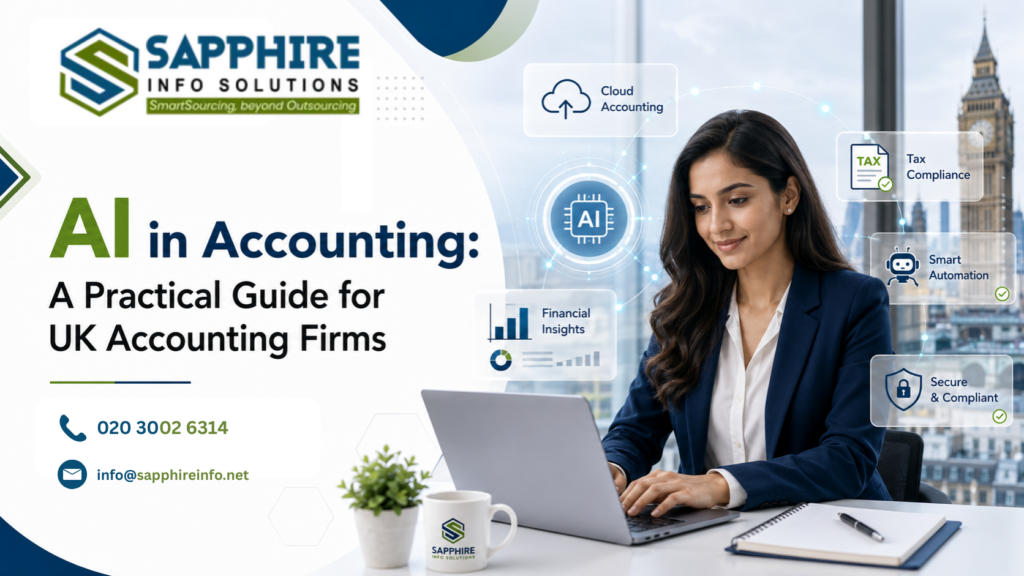
Artificial intelligence has moved from a buzzword to a genuine operational tool inside accounting practices — automating reconciliations, flagging anomalies, drafting client communications, and supporting financial forecasting. Yet despite the hype, recent industry research suggests UK firms remain cautious. The 2026 Accounting Talent Index found that only 16% of firms describe themselves as “actively investing” in AI, while concerns over regulation, data privacy, and “overhyped” expectations remain common among practice leaders.
This guide cuts through the noise on AI in accounting UK firms: where AI genuinely helps accounting firms today, where it falls short, and how to start adopting it without overcommitting.
Where AI Is Already Delivering Real Value
Data Entry and Reconciliation
AI tools can scan large volumes of transaction data, flag discrepancies, and complete routine reconciliations in a fraction of the time manual review takes. For firms managing repetitive bookkeeping tasks across many clients, AI bookkeeping reconciliation is often the fastest, lowest-risk place to start.
Anomaly Detection in Auditing and Compliance
AI systems are increasingly used to scan datasets for irregularities or potential fraud indicators, allowing audit teams to focus their attention on genuinely high-risk areas rather than reviewing every transaction manually.
Client Communication and Content Drafting
Tools like ChatGPT are commonly used to draft client onboarding questionnaires, engagement letters, and routine correspondence — saving time on tasks that previously required starting from a blank page each time.
Financial Forecasting
Machine learning models can analyse historical data to project cash flow trends and support budget planning, giving firms a stronger basis for advisory conversations with clients.
Where AI Still Falls Short
It’s Only as Good as the Data and Prompts Behind It
AI accounting tools, particularly generative ones, can produce confident-sounding output that’s factually wrong if not given clear, specific prompts and accurate underlying data. Fact-checking AI-generated content remains essential, especially for anything client-facing or compliance-related.
It Can’t Replace Professional Judgment
AI excels at pattern recognition and flagging anomalies — it doesn’t replace the judgment required to interpret what those anomalies mean for a specific client’s circumstances, or the relationship-building that drives client retention.
Regulatory and Data Privacy Concerns Are Legitimate
Industry surveys show meaningful proportions of firms cite regulatory uncertainty and data privacy as reasons for cautious AI adoption. These aren’t excuses to avoid AI altogether, but they are valid reasons to choose tools carefully and understand exactly how client data is processed and stored.
Adoption Without Training Rarely Delivers Results
Buying AI software is the easy part. Many firms underestimate the training required to get staff genuinely comfortable using these tools day-to-day — without that investment, expensive software often goes underused.
A Practical Starting Point for Firms
If your firm hasn’t yet adopted AI tools in any meaningful way, a phased approach to building automation into an accounting practice tends to work better than a full-scale rollout:
Step 1: Start With Low-Risk, High-Volume Tasks
Reconciliations, expense categorisation, and routine data entry are good starting points — repetitive, rules-based tasks where errors are easy to catch and the time savings are immediate.
Step 2: Keep a Human Review Step in Place
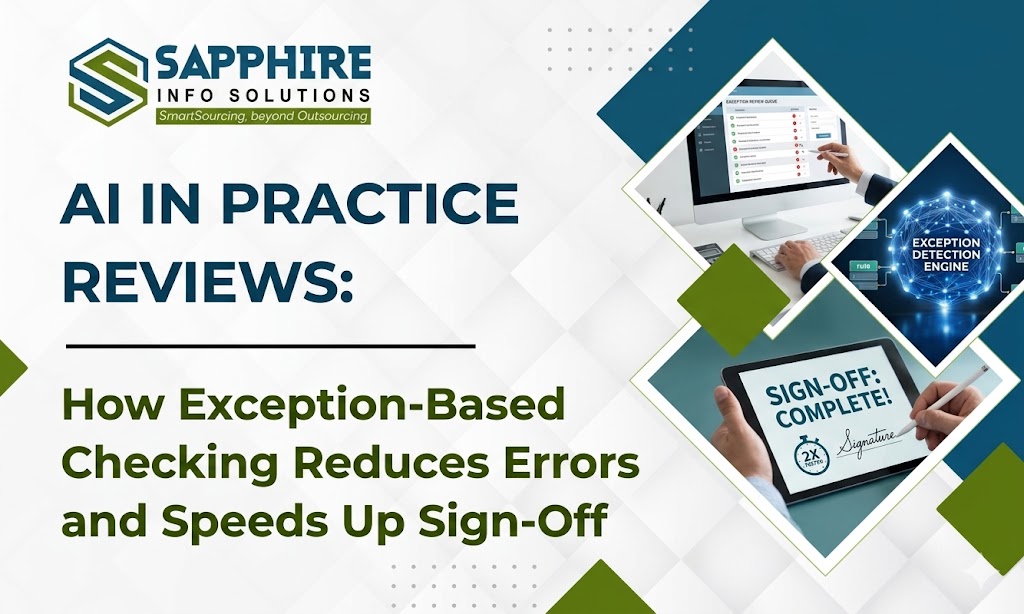
Particularly for anything client-facing or compliance-related, pair AI-generated output with human review before it goes out the door. This combination — automation plus oversight — tends to deliver both speed and accuracy.
Step 3: Train Staff Properly, Not Just Once
A short induction session isn’t enough. Build ongoing training into your team’s workflow so AI tools actually get used effectively, rather than being abandoned after initial enthusiasm fades.
Step 4: Choose Tools With Clear Data Handling Policies
Before adopting any AI tool, understand exactly where client data goes, how it’s stored, and whether it’s used to train external models. This matters both for compliance and for client trust.
Step 5: Reframe the Goal as Advisory Capacity, Not Just Cost-Cutting
Firms that get the most value from AI tend to frame it as freeing up time for higher-value advisory work — not purely as a way to cut headcount. That framing also tends to land better with staff, who are understandably wary of automation framed purely as a cost-cutting exercise.
The Bigger Shift: From Compliance Processor to Trusted Advisor
As AI absorbs more routine, rules-based work, this stage of accounting firm digital transformation means the accountants who continue to add the most value will be the ones who lean into forecasting, strategic guidance, and client relationships — the parts of the job that genuinely require human judgment. Industry leaders increasingly frame this as the central opportunity of AI adoption: not replacing accountants, but freeing them to do more of the work that actually retains and grows client relationships.
Where Outsourced Support Complements AI Adoption
For many firms, the practical reality is that adopting AI tools, building outsourced capacity, and growing AI advisory services for accountants go hand in hand. AI handles the repetitive pattern-recognition work; a trained team — whether in-house or outsourced — handles the review, judgment calls, and client communication that AI can’t.
Sapphire Info Solutions combines exactly this approach for the UK firms it works with: AI-powered checks running alongside dual-layer human review, so firms get the speed benefits of automation without losing the accuracy and accountability that client work demands.
Key Takeaways
- Despite the hype, only a small minority of UK accounting firms describe themselves as actively investing in AI — caution is common and not unreasonable
- AI delivers genuine value in reconciliations, anomaly detection, content drafting, and forecasting
- It does not replace professional judgment, and output still needs fact-checking and human review
- Successful adoption requires proper staff training, not just purchasing software
- The long-term opportunity is shifting accountants from compliance processing toward advisory work, where AI can’t easily substitute for human relationships