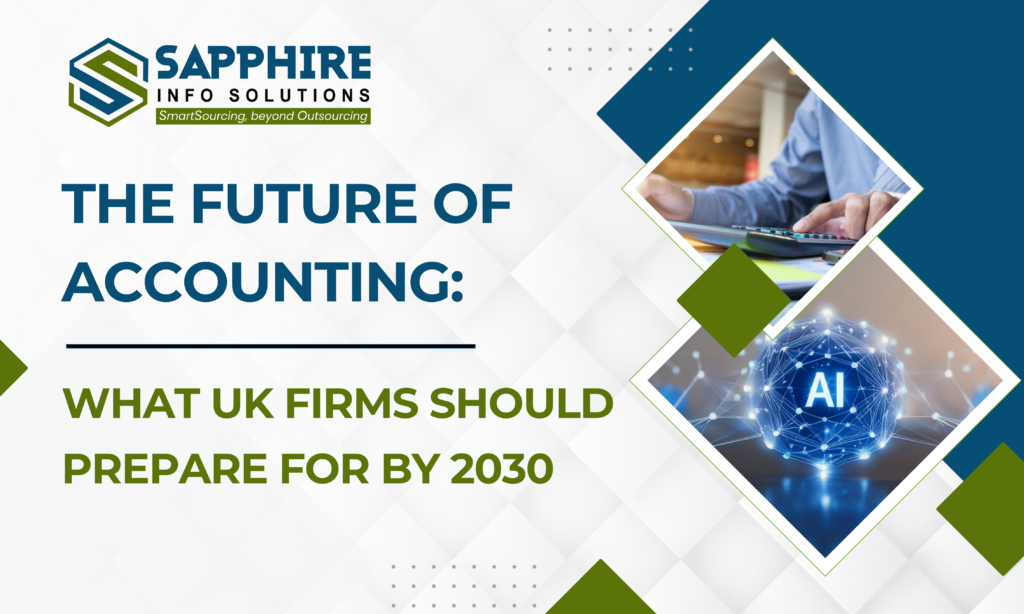
The Future of Accounting: What UK Firms Should Prepare for by 2030 

outsourced accounting services to UK

The Future of Accounting: What UK Firms Should Prepare for by 2030 

The accounting profession is undergoing profound changes, driven by rapid technological innovation, shifting regulatory landscapes, and evolving client expectations. As we look toward 2030, UK accounting firms must prepare for a new era marked by accounting automation, strategic advisory roles, and heightened compliance demands. In this blog, we outline the key trends shaping the future of accounting, and what practices must do to stay competitive, compliant, and client-focused. 

1. Embracing Accounting Automation and Digital Transformation 

The next five years will see the continued rise of accounting automation powered by artificial intelligence, robotic process automation (RPA), and cloud accounting platforms. These technologies will streamline routine processes such as data entry, invoice processing, and bank reconciliation, allowing firms to focus on higher-value services. 

Digital transformation in finance is no longer optional but essential. Firms that leverage modern tools like AI-based forecasting and real-time reporting will operate more efficiently and deliver faster, more accurate insights to clients. At Sapphire Info Solutions, we help UK firms integrate automated systems to enhance productivity and service delivery. 

2. Adapting to Evolving Compliance and Regulation 

Staying ahead of compliance and regulation will be a defining challenge by 2030. With the ongoing rollout of Making Tax Digital UK, firms must ensure clients are equipped with the necessary digital tools to remain compliant. Moreover, regulatory bodies are expected to introduce new reporting standards, particularly around data security and financial transparency. 

Being proactive about legislative changes, and preparing clients for future audits and submissions, will distinguish successful practices from those that lag behind. 

3. From Compliance to Consultancy: The Rise of Advisory Services 

As automation reduces time spent on manual tasks, accountants will increasingly shift toward offering accounting advisory services. This evolution includes budgeting, cash flow management, business planning, and strategic financial advice. 

Clients are seeking partners who can guide them through uncertain economic environments and provide value beyond year-end accounts. Firms that cultivate these capabilities will be well-positioned to build long-term client relationships and grow revenue streams. 

4. Meeting the Demand for ESG Reporting and Sustainability 

Environmental, Social, and Governance (ESG reporting) will become a central part of financial disclosure by 2030. Regulators, investors, and stakeholders are demanding greater transparency regarding sustainability metrics, carbon footprints, and ethical business practices. 

Accounting firms must be ready to help clients navigate ESG frameworks, measure sustainability performance, and report in line with emerging standards. This shift offers a new revenue opportunity for firms that invest early in ESG capabilities. 

5. Investing in the Skills for Future Accountants 

The skill set required of accountants is expanding. Beyond technical expertise, firms must invest in upskilling teams in data analysis, technology adoption, and soft skills such as communication and critical thinking. Digital literacy and adaptability will be crucial for future success. 

The skills for future accountants also include the ability to interpret data, translate insights into action, and work collaboratively in a hybrid or remote environment. Sapphire Info Solutions supports UK firms by offering access to experienced professionals with the right blend of technical and analytical skills. 

6. Supporting Hybrid Models and Remote Accounting Services 

The shift to hybrid and remote work environments is not a temporary trend but a fundamental change in how professional services operate. Clients now expect flexible communication, digital collaboration tools, and on-demand access to data. 

Remote accounting services allow practices to reduce overheads while still maintaining high service levels. Outsourcing certain functions to providers like Sapphire Info Solutions ensures business continuity, scalability, and access to global talent—all while freeing up internal resources for client-focused activities. 

7. Strengthening Cybersecurity and Data Protection 

As firms increasingly rely on cloud platforms and digital workflows, the risk of cyber threats escalates. Cybersecurity in accounting is paramount, especially with growing volumes of sensitive client data stored online. 

UK firms must invest in robust data protection protocols, regular audits, and staff training to ensure compliance with GDPR and emerging UK cybersecurity standards. Working with secure, vetted technology partners and outsourced providers is a proactive way to mitigate these risks. 

8. Leveraging Fintech Integration and Innovation 

The integration of financial technologies (fintech integration) into accounting software ecosystems is enabling real-time financial insights, seamless payment processing, and predictive analytics. From open banking APIs to AI-driven cash flow forecasting tools, fintech is revolutionising how firms and clients manage money. 

UK firms that embrace fintech will not only improve efficiency but also attract tech-savvy clients seeking dynamic financial management solutions. 

Conclusion: Prepare Today for Tomorrow’s Opportunities 

The future of accounting is not a distant vision—it is already taking shape. From AI in accounting to ESG reporting and the shift toward advisory roles, change is both inevitable and full of opportunity. 

At Sapphire Info Solutions, we specialise in providing outsourced accounting services to UK firms, helping them stay ahead of these transformative trends. By partnering with us, practices can harness the benefits of automation, streamline compliance, and focus on delivering strategic value to their clients. 

Now is the time to act. Invest in the right technologies, upskill your teams, and adapt your service model. The firms that do will thrive in 2030—and beyond.
Book Your Free Consultation Today!

Simplify your accounting processes with expert outsourcing solutions. Schedule a free consultation with us to discuss your needs.

Don’t wait—take the first step toward hassle-free accounting!

The accounting profession is undergoing profound changes, driven by rapid technological innovation, shifting regulatory landscapes, and evolving client expectations. As we look toward 2030, UK accounting firms must prepare for a new era marked by accounting automation, strategic advisory roles, and heightened compliance demands. In this blog, we outline the key trends shaping the future of accounting, and what practices must do to stay competitive, compliant, and client-focused. 

1. Embracing Accounting Automation and Digital Transformation 

The next five years will see the continued rise of accounting automation powered by artificial intelligence, robotic process automation (RPA), and cloud accounting platforms. These technologies will streamline routine processes such as data entry, invoice processing, and bank reconciliation, allowing firms to focus on higher-value services. 

Digital transformation in finance is no longer optional but essential. Firms that leverage modern tools like AI-based forecasting and real-time reporting will operate more efficiently and deliver faster, more accurate insights to clients. At Sapphire Info Solutions, we help UK firms integrate automated systems to enhance productivity and service delivery. 

2. Adapting to Evolving Compliance and Regulation 

Staying ahead of compliance and regulation will be a defining challenge by 2030. With the ongoing rollout of Making Tax Digital UK, firms must ensure clients are equipped with the necessary digital tools to remain compliant. Moreover, regulatory bodies are expected to introduce new reporting standards, particularly around data security and financial transparency. 

Being proactive about legislative changes, and preparing clients for future audits and submissions, will distinguish successful practices from those that lag behind. 

3. From Compliance to Consultancy: The Rise of Advisory Services 

As automation reduces time spent on manual tasks, accountants will increasingly shift toward offering accounting advisory services. This evolution includes budgeting, cash flow management, business planning, and strategic financial advice. 

Clients are seeking partners who can guide them through uncertain economic environments and provide value beyond year-end accounts. Firms that cultivate these capabilities will be well-positioned to build long-term client relationships and grow revenue streams. 

4. Meeting the Demand for ESG Reporting and Sustainability 

Environmental, Social, and Governance (ESG reporting) will become a central part of financial disclosure by 2030. Regulators, investors, and stakeholders are demanding greater transparency regarding sustainability metrics, carbon footprints, and ethical business practices. 

Accounting firms must be ready to help clients navigate ESG frameworks, measure sustainability performance, and report in line with emerging standards. This shift offers a new revenue opportunity for firms that invest early in ESG capabilities. 

5. Investing in the Skills for Future Accountants 

The skill set required of accountants is expanding. Beyond technical expertise, firms must invest in upskilling teams in data analysis, technology adoption, and soft skills such as communication and critical thinking. Digital literacy and adaptability will be crucial for future success. 

The skills for future accountants also include the ability to interpret data, translate insights into action, and work collaboratively in a hybrid or remote environment. Sapphire Info Solutions supports UK firms by offering access to experienced professionals with the right blend of technical and analytical skills. 

6. Supporting Hybrid Models and Remote Accounting Services 

The shift to hybrid and remote work environments is not a temporary trend but a fundamental change in how professional services operate. Clients now expect flexible communication, digital collaboration tools, and on-demand access to data. 

Remote accounting services allow practices to reduce overheads while still maintaining high service levels. Outsourcing certain functions to providers like Sapphire Info Solutions ensures business continuity, scalability, and access to global talent—all while freeing up internal resources for client-focused activities. 

7. Strengthening Cybersecurity and Data Protection 

As firms increasingly rely on cloud platforms and digital workflows, the risk of cyber threats escalates. Cybersecurity in accounting is paramount, especially with growing volumes of sensitive client data stored online. 

UK firms must invest in robust data protection protocols, regular audits, and staff training to ensure compliance with GDPR and emerging UK cybersecurity standards. Working with secure, vetted technology partners and outsourced providers is a proactive way to mitigate these risks. 

8. Leveraging Fintech Integration and Innovation 

The integration of financial technologies (fintech integration) into accounting software ecosystems is enabling real-time financial insights, seamless payment processing, and predictive analytics. From open banking APIs to AI-driven cash flow forecasting tools, fintech is revolutionising how firms and clients manage money. 

UK firms that embrace fintech will not only improve efficiency but also attract tech-savvy clients seeking dynamic financial management solutions. 

Conclusion: Prepare Today for Tomorrow’s Opportunities 

The future of accounting is not a distant vision—it is already taking shape. From AI in accounting to ESG reporting and the shift toward advisory roles, change is both inevitable and full of opportunity. 

At Sapphire Info Solutions, we specialise in providing outsourced accounting services to UK firms, helping them stay ahead of these transformative trends. By partnering with us, practices can harness the benefits of automation, streamline compliance, and focus on delivering strategic value to their clients. 

Now is the time to act. Invest in the right technologies, upskill your teams, and adapt your service model. The firms that do will thrive in 2030—and beyond.
The Essential Guide to Outsourced Accounting
for UK Accounting Firms
The Essential Guide to Outsourced Accounting
for UK Accounting Firms
Influencing Outsourcing for Accounting Practices
A guide examining the alternatives for Outsourcing and in-house operations
5 Key Factors
Influencing Outsourcing for Accounting Practices
5 Key Factors
A guide examining the alternatives for Outsourcing and in-house operations
Guide For Small Accounting Firms In The UK
Cybersecurity
Guide For Small Accounting Firms In The UK
Cybersecurity
Sapphire Guide To AI For Accountants
AI Fundamentals
Sapphire Guide To AI For Accountants
AI Fundamentals
×