
A Practical Review Framework for Outsourced Work: How UK Accounting Firms Maintain Quality Control

A Practical Review Framework for Outsourced Work: How UK Accounting Firms Maintain Quality Control

Outsourcing accounting work is no longer unusual for UK firms.
With ongoing talent shortages, rising compliance pressure, and increasing client expectations, many firms now rely on outsourced back-office support to manage workloads.

However, one concern consistently holds firms back:

“How do we maintain quality control when work is outsourced?”

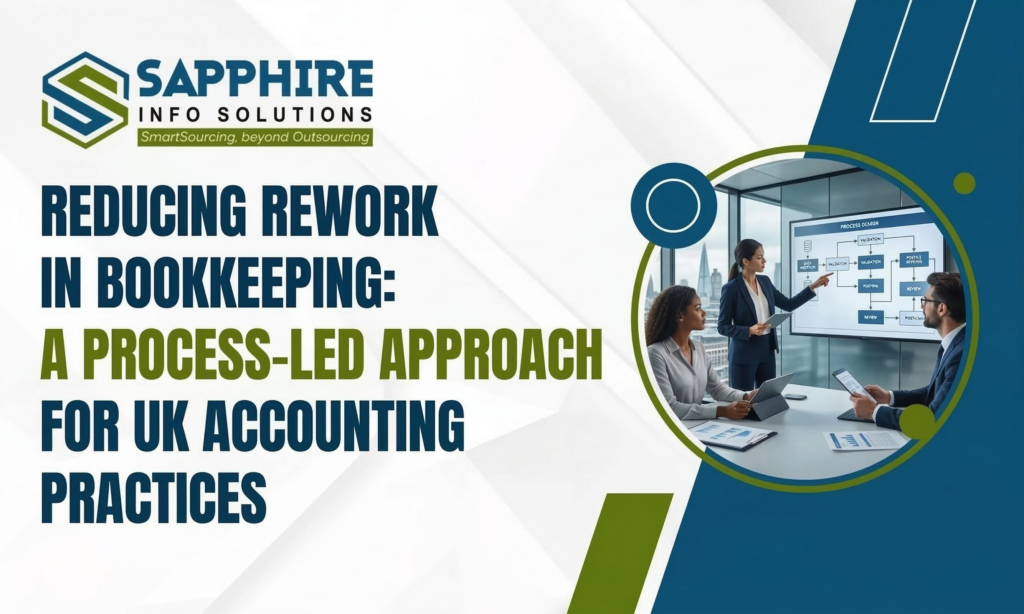
The answer lies not in more checking—but in a clear, practical review framework that ensures accuracy, consistency, and accountability.

Why Quality Control Is a Major Concern in Outsourced Accounting

UK accounting firms operate in a high-risk environment:

  • HMRC scrutiny continues to increase
  • Compliance deadlines are unforgiving
  • Errors affect client trust and firm reputation

When outsourcing bookkeeping, VAT, tax returns, payroll, or year-end accounts, quality must
remain consistent—regardless of who prepares the work.

Without a structured review framework, firms often experience:

  • Increased rework at senior level
  • Inconsistent working papers
  • Delayed turnaround times
  • Frustration between internal and external teams

Outsourcing Doesn’t Reduce Control—Lack of Process Does

A common misconception is that outsourcing means giving up control.
In reality, control comes from process, not proximity.

Firms that successfully outsource work do three things well:

  1. Define preparation standards clearly
  2. Build review checkpoints into workflows
  3. Maintain ownership of final sign-off

This is where a practical review framework becomes essential.

What Is a Practical Review Framework?

A practical review framework is a repeatable structure that ensures outsourced work:

  • Meets firm standards
  • Is review-ready when delivered
  • Requires minimal correction
  • Supports compliance and audit trails

It applies across all outsourced services, including:

  • Bookkeeping & VAT
  • Tax returns
  • Management accounts
  • Year-end accounts
  • Payroll
  • Audit support

Sapphire Info Solutions supports UK accounting firms by aligning outsourced back-office delivery to clearly defined review frameworks rather than ad-hoc checking.

Step 1: Standardise Inputs Before Work Begins

Most quality issues originate before work starts.

To reduce errors:

  • Standardise source documents and templates
  • Define chart of accounts mapping
  • Set clear cut-off dates for bookkeeping and VAT
  • Agree on software and version controls

Clean inputs improve accuracy and speed across all downstream services.

Step 2: Define “Review-Ready” Output for Each Service

Review time reduces significantly when expectations are clear.

For example:

  • Bookkeeping & VAT: reconciled balances, supporting schedules, exception notes
  • Tax Returns: complete working papers, assumptions documented
  • Management Accounts: consistent formats, variance explanations
  • Year-End Accounts: full lead schedules and reconciliations
  • Payroll: RTI submissions checked, variance notes included
  • Audit Support: indexed working papers and evidence trails

Sapphire Info Solutions delivers work to agreed “review-ready” standards, reducing senior-level corrections.

Step 3: Build Tiered Review Checkpoints

Effective quality control relies on tiered reviews, not one final check.

A simple structure:

  • Level 1: Self-review by preparer
  • Level 2: Internal quality check within the outsourced team
  • Level 3: UK firm review and sign-off

This approach:

  • Catches errors earlier
  • Prevents issues reaching partners
  • Improves turnaround times

Step 4: Use Exception-Based Reviewing

Reviewing every line item is inefficient and unnecessary.

Instead:

  • Focus reviews on exceptions and risk areas
  • Use checklists for compliance-sensitive work
  • Flag unusual movements, variances, or inconsistencies

This method saves time while improving accuracy.

Sapphire Info Solutions supports exception-led workflows across outsourced accounting and back-office services.

Step 5: Maintain Clear Communication and Feedback Loops

Quality control improves when feedback flows both ways.

Best practices include:

  • Clear review notes and correction logs
  • Regular feedback sessions
  • Updates to process documentation

This prevents repeat errors and strengthens long-term delivery quality.

Step 6: Protect Compliance and Audit Trails

Quality control is not just about accuracy—it’s about defensibility.

A good framework ensures:

  • All assumptions are documented
  • Working papers are traceable
  • Changes are logged
  • Data access is controlled

This is particularly critical for VAT, tax returns, payroll, and audit support work.
Sapphire Info Solutions operates within secure, controlled processes that support audit readiness and compliance confidence.

How a Strong Review Framework Improves Turnaround and Profitability

When review frameworks are applied correctly:

  • Rework reduces significantly
  • Senior staff regain capacity
  • Turnaround times improve
  • Billing cycles accelerate
  • Client satisfaction increases

Outsourcing becomes a strategic advantage, not a risk.

Outsourcing as an Extension of Your Firm

The most successful UK accounting firms treat outsourcing as:

  • A structured extension of their team
  • Governed by clear processes
  • Reviewed under firm standards
  • Invisible to clients

Sapphire Info Solutions works with UK accounting firms as a white-label, back-office support partner—delivering outsourced bookkeeping, VAT, tax returns, management accounts, year – end accounts, payroll, and audit support within defined review frameworks.

Final Thoughts

Outsourcing does not weaken quality control.
Poor processes do.

With a practical review framework in place, UK accounting firms can confidently outsource work while maintaining accuracy, compliance, and consistency.

The result is faster turnaround, reduced pressure on internal teams, and a more scalable, profitable practice.


Book Your Free Consultation Today!

Simplify your accounting processes with expert outsourcing solutions. Schedule a free consultation with us to discuss your needs.

Don’t wait—take the first step toward hassle-free accounting!

Outsourcing accounting work is no longer unusual for UK firms.
With ongoing talent shortages, rising compliance pressure, and increasing client expectations, many firms now rely on outsourced back-office support to manage workloads.

However, one concern consistently holds firms back:

“How do we maintain quality control when work is outsourced?”

The answer lies not in more checking—but in a clear, practical review framework that ensures accuracy, consistency, and accountability.

Why Quality Control Is a Major Concern in Outsourced Accounting

UK accounting firms operate in a high-risk environment:

  • HMRC scrutiny continues to increase
  • Compliance deadlines are unforgiving
  • Errors affect client trust and firm reputation

When outsourcing bookkeeping, VAT, tax returns, payroll, or year-end accounts, quality must
remain consistent—regardless of who prepares the work.

Without a structured review framework, firms often experience:

  • Increased rework at senior level
  • Inconsistent working papers
  • Delayed turnaround times
  • Frustration between internal and external teams

Outsourcing Doesn’t Reduce Control—Lack of Process Does

A common misconception is that outsourcing means giving up control.
In reality, control comes from process, not proximity.

Firms that successfully outsource work do three things well:

  1. Define preparation standards clearly
  2. Build review checkpoints into workflows
  3. Maintain ownership of final sign-off

This is where a practical review framework becomes essential.

What Is a Practical Review Framework?

A practical review framework is a repeatable structure that ensures outsourced work:

  • Meets firm standards
  • Is review-ready when delivered
  • Requires minimal correction
  • Supports compliance and audit trails

It applies across all outsourced services, including:

  • Bookkeeping & VAT
  • Tax returns
  • Management accounts
  • Year-end accounts
  • Payroll
  • Audit support

Sapphire Info Solutions supports UK accounting firms by aligning outsourced back-office delivery to clearly defined review frameworks rather than ad-hoc checking.

Step 1: Standardise Inputs Before Work Begins

Most quality issues originate before work starts.

To reduce errors:

  • Standardise source documents and templates
  • Define chart of accounts mapping
  • Set clear cut-off dates for bookkeeping and VAT
  • Agree on software and version controls

Clean inputs improve accuracy and speed across all downstream services.

Step 2: Define “Review-Ready” Output for Each Service

Review time reduces significantly when expectations are clear.

For example:

  • Bookkeeping & VAT: reconciled balances, supporting schedules, exception notes
  • Tax Returns: complete working papers, assumptions documented
  • Management Accounts: consistent formats, variance explanations
  • Year-End Accounts: full lead schedules and reconciliations
  • Payroll: RTI submissions checked, variance notes included
  • Audit Support: indexed working papers and evidence trails

Sapphire Info Solutions delivers work to agreed “review-ready” standards, reducing senior-level corrections.

Step 3: Build Tiered Review Checkpoints

Effective quality control relies on tiered reviews, not one final check.

A simple structure:

  • Level 1: Self-review by preparer
  • Level 2: Internal quality check within the outsourced team
  • Level 3: UK firm review and sign-off

This approach:

  • Catches errors earlier
  • Prevents issues reaching partners
  • Improves turnaround times

Step 4: Use Exception-Based Reviewing

Reviewing every line item is inefficient and unnecessary.

Instead:

  • Focus reviews on exceptions and risk areas
  • Use checklists for compliance-sensitive work
  • Flag unusual movements, variances, or inconsistencies

This method saves time while improving accuracy.

Sapphire Info Solutions supports exception-led workflows across outsourced accounting and back-office services.

Step 5: Maintain Clear Communication and Feedback Loops

Quality control improves when feedback flows both ways.

Best practices include:

  • Clear review notes and correction logs
  • Regular feedback sessions
  • Updates to process documentation

This prevents repeat errors and strengthens long-term delivery quality.

Step 6: Protect Compliance and Audit Trails

Quality control is not just about accuracy—it’s about defensibility.

A good framework ensures:

  • All assumptions are documented
  • Working papers are traceable
  • Changes are logged
  • Data access is controlled

This is particularly critical for VAT, tax returns, payroll, and audit support work.
Sapphire Info Solutions operates within secure, controlled processes that support audit readiness and compliance confidence.

How a Strong Review Framework Improves Turnaround and Profitability

When review frameworks are applied correctly:

  • Rework reduces significantly
  • Senior staff regain capacity
  • Turnaround times improve
  • Billing cycles accelerate
  • Client satisfaction increases

Outsourcing becomes a strategic advantage, not a risk.

Outsourcing as an Extension of Your Firm

The most successful UK accounting firms treat outsourcing as:

  • A structured extension of their team
  • Governed by clear processes
  • Reviewed under firm standards
  • Invisible to clients

Sapphire Info Solutions works with UK accounting firms as a white-label, back-office support partner—delivering outsourced bookkeeping, VAT, tax returns, management accounts, year – end accounts, payroll, and audit support within defined review frameworks.

Final Thoughts

Outsourcing does not weaken quality control.
Poor processes do.

With a practical review framework in place, UK accounting firms can confidently outsource work while maintaining accuracy, compliance, and consistency.

The result is faster turnaround, reduced pressure on internal teams, and a more scalable, profitable practice.
The Essential Guide to Outsourced Accounting
for UK Accounting Firms
The Essential Guide to Outsourced Accounting
for UK Accounting Firms
Influencing Outsourcing for Accounting Practices
A guide examining the alternatives for Outsourcing and in-house operations
5 Key Factors
Influencing Outsourcing for Accounting Practices
5 Key Factors
A guide examining the alternatives for Outsourcing and in-house operations
Guide For Small Accounting Firms In The UK
Cybersecurity
Guide For Small Accounting Firms In The UK
Cybersecurity
Sapphire Guide To AI For Accountants
AI Fundamentals
Sapphire Guide To AI For Accountants
AI Fundamentals
Open book icon ×