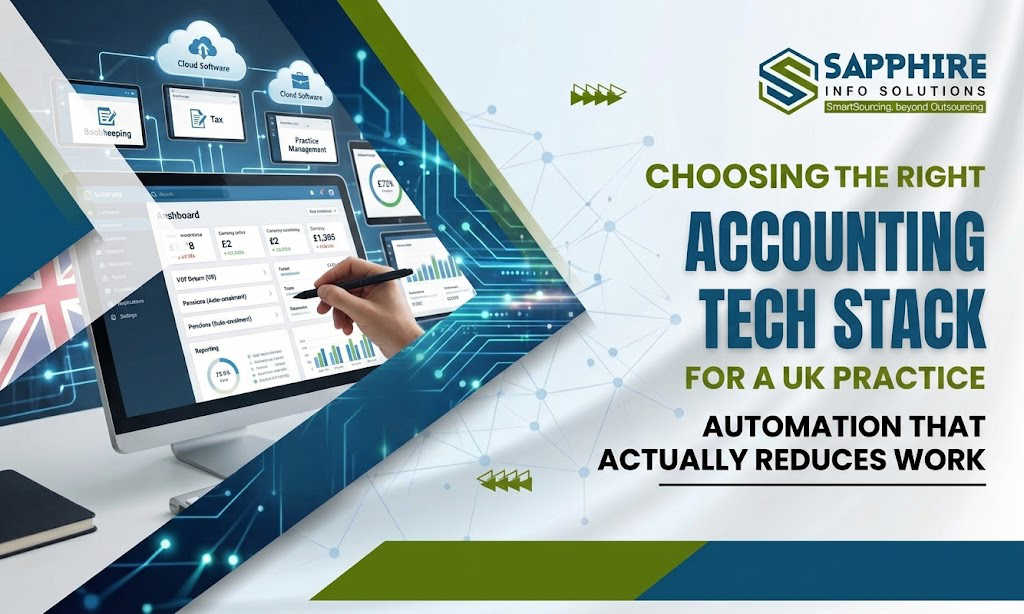
Choosing the Right Accounting Tech Stack for a UK Practice: Automation That ActuallyReduces Work

Choosing the Right Accounting Tech Stack for a UK Practice: Automation That ActuallyReduces Work

Most UK accounting firms have invested heavily in software over the past few years. Cloud bookkeeping, automation tools, portals, and practice management systems are now common.

Yet many firm owners and practice managers still ask the same question:

“Why does it feel like we’re busier than ever?”

The answer is rarely the technology itself.

The issue is how the tech stack is designed, connected, and supported.

This blog explains how UK accounting firms can choose the right accounting tech stack—one that genuinely reduces workload—and how outsourced back-office support helps turn technology into real operational relief.

Why More Software Doesn’t Always Mean Less Work

A typical UK accounting firm tech stack may include:

  • Cloud bookkeeping software (Xero, QuickBooks, Sage)
  • Data capture tools
  • Practice management platforms
  • Client portals
  • Reporting and review tools

Despite this, firms still struggle with:

  • Bookkeeping backlogs
  • Slow turnaround times
  • Rework at review stage
  • Pressure during VAT, payroll, and year-end cycles

The problem is not lack of tools—it’s fragmentation and capacity.

What “The Right Tech Stack” Actually Means

The right accounting tech stack is not the most advanced one.

It is the one that supports your workflows, team structure, and client base.

A stack that reduces work should:

  • Eliminate manual duplication
  • Standardise how work flows from bookkeeping to year-end
  • Support review and compliance processes
  • Scale without constant hiring
  • Be easy for teams to follow consistently

Technology should simplify delivery—not add more steps.

Step 1: Start With Core Bookkeeping & VAT Systems

Bookkeeping is the foundation of every accounting service.

If bookkeeping workflows are inconsistent:

  • VAT returns take longer
  • Management accounts are delayed
  • Tax returns require more adjustments
  • Year-end accounts become stressful

A strong tech stack starts with:

  • One or two standard bookkeeping platforms
  • Consistent chart of accounts and coding rules
  • Clear VAT workflows and cut-off dates

Sapphire Info Solutions supports UK accounting firms by aligning outsourced bookkeeping and VAT services to firm-approved systems—keeping data clean and review-ready.

Step 2: Align Technology With Your Review Process

Many firms automate preparation but ignore review.

This creates:

  • Faster processing of incorrect data
  • More rework for managers and partners
  • Slower sign-off despite automation

A practical tech stack:

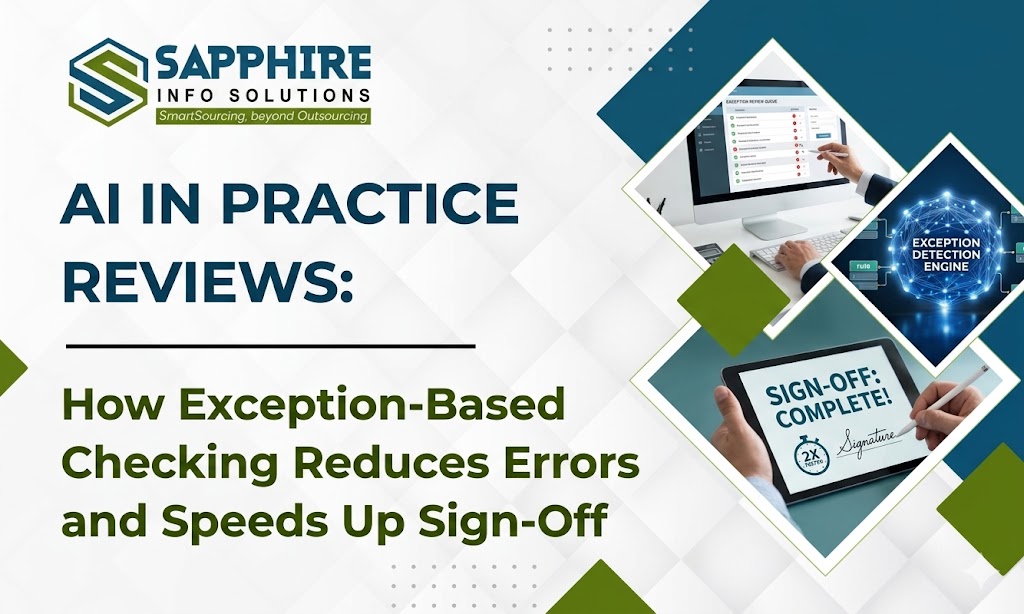
  • Supports exception-based reviews
  • Flags unusual movements early
  • Reduces the need for line-by-line checking

When outsourced back-office teams deliver work to defined review standards, technology becomes a genuine time saver rather than a bottleneck.

Step 3: Integrate Management Accounts and Reporting

Management accounts often fall behind because:

  • Data is incomplete
  • Reporting formats vary
  • Teams lack time for consistent delivery

The right tech stack:

  • Pulls data directly from clean bookkeeping
  • Uses standard report templates
  • Supports regular monthly or quarterly reporting

Outsourced management accounts preparation from Sapphire Info Solutions helps firms maintain consistent reporting cycles without increasing internal workload.

Step 4: Support Year-End Accounts and Compliance Workflows

Year-end accounts, tax returns, and audit support are where poor tech decisions show up most clearly.

Common issues include:

  • Missing working papers
  • Inconsistent lead schedules
  • Manual adjustments late in the process

A strong tech stack supports:

  • Structured year-end accounts preparation
  • Clear audit trails
  • Consistent tax and compliance workflows

Sapphire Info Solutions works with UK firms to ensure outsourced year-end, tax, and audit support aligns with their chosen systems and documentation standards.

Step 5: Don’t Ignore Payroll and Specialist Services

Payroll and audit support work are highly deadline-driven.

The right systems:

  • Reduce manual data handling
  • Support RTI and compliance checks
  • Integrate with bookkeeping and reporting

Outsourced payroll and audit support ensure these specialist services do not disrupt core delivery workflows.

Why Technology Alone Rarely Reduces Workload

Many UK accounting firms experience “automation fatigue” because:

  • Tools are layered on top of broken processes
  • Staff are overloaded and skip best practices
  • There is no capacity to maintain consistency

Technology needs people and process to work properly.

This is where outsourced back-office support becomes essential.

How Outsourced Back-Office Support Makes Tech Stacks Work

Outsourced accounting support helps firms:

  • Maintain consistent use of systems
  • Follow documented workflows
  • Deliver review-ready outputs
  • Absorb volume during peak periods
  • Reduce dependency on individual staff

Sapphire Info Solutions supports UK accounting firms as a white-label back-office partner, working within existing tech stacks to deliver bookkeeping, VAT, tax returns, management accounts, year-end accounts, payroll, and audit support—without disrupting client relationships.

Common Tech Stack Mistakes UK Firms Should Avoid

To truly reduce work, firms should avoid:

  • Using too many tools without integration
  • Automating inconsistent processes
  • Ignoring review and sign-off stages
  • Expecting software to fix capacity issues
  • Changing systems too frequently

A smaller, well-managed tech stack supported by reliable delivery usually outperforms complex setups.

A Smarter Way to Reduce Work Without Hiring

For many UK accounting firms, the winning combination is:

  • A practical, standardised tech stack
  • Clear workflows from bookkeeping to year-end
  • Exception-based review processes
  • Outsourced back-office capacity to support delivery

This approach improves:

  • Turnaround times
  • Accuracy and compliance
  • Staff wellbeing
  • Firm profitability

Final Thoughts

Choosing the right accounting tech stack is not about chasing the latest tools.

It’s about building a system that genuinely reduces effort and supports growth.

UK accounting firms that combine smart technology choices with reliable outsourced back-office support see the greatest benefits—less rework, faster delivery, and more capacity for advisory work.

Sapphire Info Solutions works alongside UK accounting firms to help technology deliver real results, providing structured outsourced accounting and back-office support that strengthens workflows rather than complicating them.
Book Your Free Consultation Today!

Simplify your accounting processes with expert outsourcing solutions. Schedule a free consultation with us to discuss your needs.

Don’t wait—take the first step toward hassle-free accounting!

Most UK accounting firms have invested heavily in software over the past few years. Cloud bookkeeping, automation tools, portals, and practice management systems are now common.

Yet many firm owners and practice managers still ask the same question:

“Why does it feel like we’re busier than ever?”

The answer is rarely the technology itself.

The issue is how the tech stack is designed, connected, and supported.

This blog explains how UK accounting firms can choose the right accounting tech stack—one that genuinely reduces workload—and how outsourced back-office support helps turn technology into real operational relief.

Why More Software Doesn’t Always Mean Less Work

A typical UK accounting firm tech stack may include:

  • Cloud bookkeeping software (Xero, QuickBooks, Sage)
  • Data capture tools
  • Practice management platforms
  • Client portals
  • Reporting and review tools

Despite this, firms still struggle with:

  • Bookkeeping backlogs
  • Slow turnaround times
  • Rework at review stage
  • Pressure during VAT, payroll, and year-end cycles

The problem is not lack of tools—it’s fragmentation and capacity.

What “The Right Tech Stack” Actually Means

The right accounting tech stack is not the most advanced one.

It is the one that supports your workflows, team structure, and client base.

A stack that reduces work should:

  • Eliminate manual duplication
  • Standardise how work flows from bookkeeping to year-end
  • Support review and compliance processes
  • Scale without constant hiring
  • Be easy for teams to follow consistently

Technology should simplify delivery—not add more steps.

Step 1: Start With Core Bookkeeping & VAT Systems

Bookkeeping is the foundation of every accounting service.

If bookkeeping workflows are inconsistent:

  • VAT returns take longer
  • Management accounts are delayed
  • Tax returns require more adjustments
  • Year-end accounts become stressful

A strong tech stack starts with:

  • One or two standard bookkeeping platforms
  • Consistent chart of accounts and coding rules
  • Clear VAT workflows and cut-off dates

Sapphire Info Solutions supports UK accounting firms by aligning outsourced bookkeeping and VAT services to firm-approved systems—keeping data clean and review-ready.

Step 2: Align Technology With Your Review Process

Many firms automate preparation but ignore review.

This creates:

  • Faster processing of incorrect data
  • More rework for managers and partners
  • Slower sign-off despite automation

A practical tech stack:

  • Supports exception-based reviews
  • Flags unusual movements early
  • Reduces the need for line-by-line checking

When outsourced back-office teams deliver work to defined review standards, technology becomes a genuine time saver rather than a bottleneck.

Step 3: Integrate Management Accounts and Reporting

Management accounts often fall behind because:

  • Data is incomplete
  • Reporting formats vary
  • Teams lack time for consistent delivery

The right tech stack:

  • Pulls data directly from clean bookkeeping
  • Uses standard report templates
  • Supports regular monthly or quarterly reporting

Outsourced management accounts preparation from Sapphire Info Solutions helps firms maintain consistent reporting cycles without increasing internal workload.

Step 4: Support Year-End Accounts and Compliance Workflows

Year-end accounts, tax returns, and audit support are where poor tech decisions show up most clearly.

Common issues include:

  • Missing working papers
  • Inconsistent lead schedules
  • Manual adjustments late in the process

A strong tech stack supports:

  • Structured year-end accounts preparation
  • Clear audit trails
  • Consistent tax and compliance workflows

Sapphire Info Solutions works with UK firms to ensure outsourced year-end, tax, and audit support aligns with their chosen systems and documentation standards.

Step 5: Don’t Ignore Payroll and Specialist Services

Payroll and audit support work are highly deadline-driven.

The right systems:

  • Reduce manual data handling
  • Support RTI and compliance checks
  • Integrate with bookkeeping and reporting

Outsourced payroll and audit support ensure these specialist services do not disrupt core delivery workflows.

Why Technology Alone Rarely Reduces Workload

Many UK accounting firms experience “automation fatigue” because:

  • Tools are layered on top of broken processes
  • Staff are overloaded and skip best practices
  • There is no capacity to maintain consistency

Technology needs people and process to work properly.

This is where outsourced back-office support becomes essential.

How Outsourced Back-Office Support Makes Tech Stacks Work

Outsourced accounting support helps firms:

  • Maintain consistent use of systems
  • Follow documented workflows
  • Deliver review-ready outputs
  • Absorb volume during peak periods
  • Reduce dependency on individual staff

Sapphire Info Solutions supports UK accounting firms as a white-label back-office partner, working within existing tech stacks to deliver bookkeeping, VAT, tax returns, management accounts, year-end accounts, payroll, and audit support—without disrupting client relationships.

Common Tech Stack Mistakes UK Firms Should Avoid

To truly reduce work, firms should avoid:

  • Using too many tools without integration
  • Automating inconsistent processes
  • Ignoring review and sign-off stages
  • Expecting software to fix capacity issues
  • Changing systems too frequently

A smaller, well-managed tech stack supported by reliable delivery usually outperforms complex setups.

A Smarter Way to Reduce Work Without Hiring

For many UK accounting firms, the winning combination is:

  • A practical, standardised tech stack
  • Clear workflows from bookkeeping to year-end
  • Exception-based review processes
  • Outsourced back-office capacity to support delivery

This approach improves:

  • Turnaround times
  • Accuracy and compliance
  • Staff wellbeing
  • Firm profitability

Final Thoughts

Choosing the right accounting tech stack is not about chasing the latest tools.

It’s about building a system that genuinely reduces effort and supports growth.

UK accounting firms that combine smart technology choices with reliable outsourced back-office support see the greatest benefits—less rework, faster delivery, and more capacity for advisory work.

Sapphire Info Solutions works alongside UK accounting firms to help technology deliver real results, providing structured outsourced accounting and back-office support that strengthens workflows rather than complicating them.

The Essential Guide to Outsourced Accounting
for UK Accounting Firms
The Essential Guide to Outsourced Accounting
for UK Accounting Firms
Influencing Outsourcing for Accounting Practices
A guide examining the alternatives for Outsourcing and in-house operations
5 Key Factors
Influencing Outsourcing for Accounting Practices
5 Key Factors
A guide examining the alternatives for Outsourcing and in-house operations
Guide For Small Accounting Firms In The UK
Cybersecurity
Guide For Small Accounting Firms In The UK
Cybersecurity
Sapphire Guide To AI For Accountants
AI Fundamentals
Sapphire Guide To AI For Accountants
AI Fundamentals
Open book icon ×